This post may contain affiliate links. Read my full disclosure policy.
Made with tender baked eggs, flavorful sausage, and melty cheese, these homemade breakfast sandwiches are perfect for feeding a crowd.
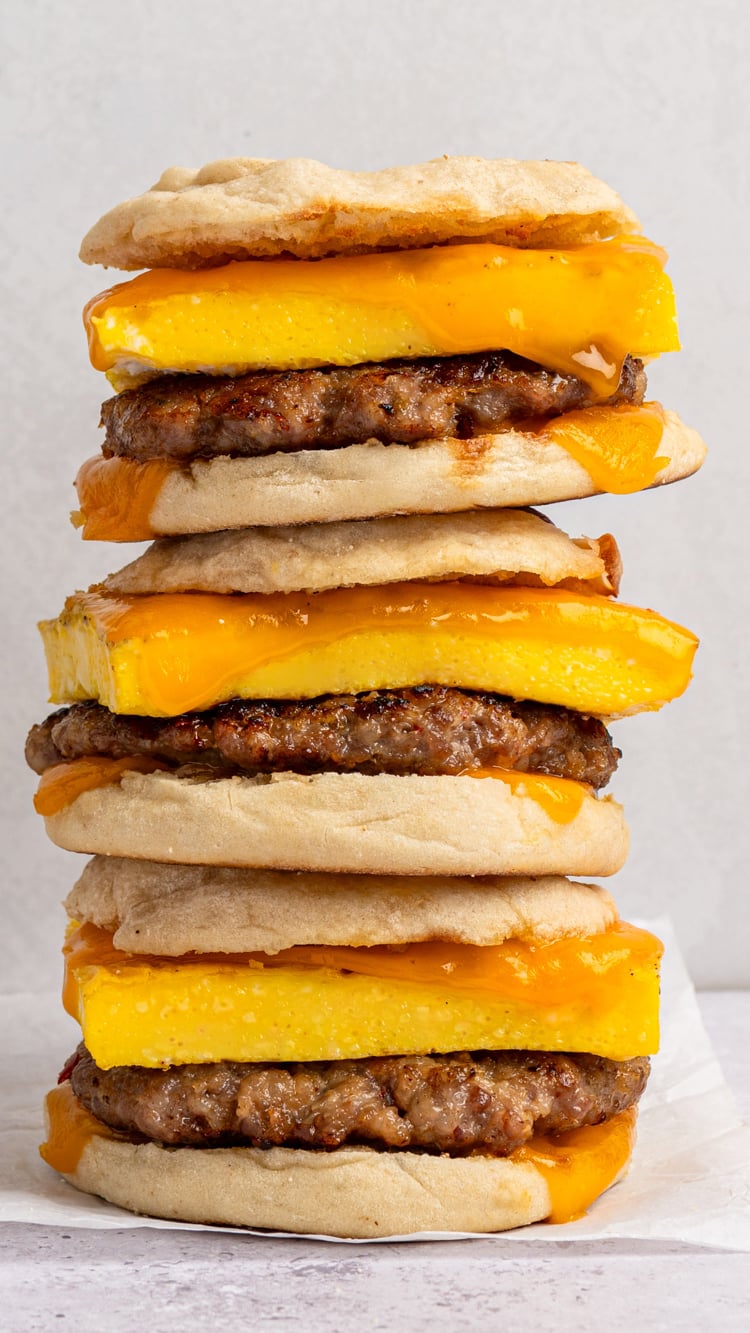
If you’re a fan of the sausage, egg, and cheese sandwiches from places like Starbucks, you’ll love this homemade version. The eggs cook at the same time in the oven, so you don’t need to stand at the stove to cook them one by one. You can serve a whole platter when you have hungry family members or guests to feed, or keep a few in the fridge for an easy breakfast during the week. Either way, they’re way better than anything you’ll get behind the wheel.
The recipe is simple, but a simple technique makes all the difference: cook the eggs in a bain-marie. It helps eggs cook gently and evenly, giving them a tender, almost custard-like texture.
Contents
What You’ll Need to Make Breakfast Sandwiches
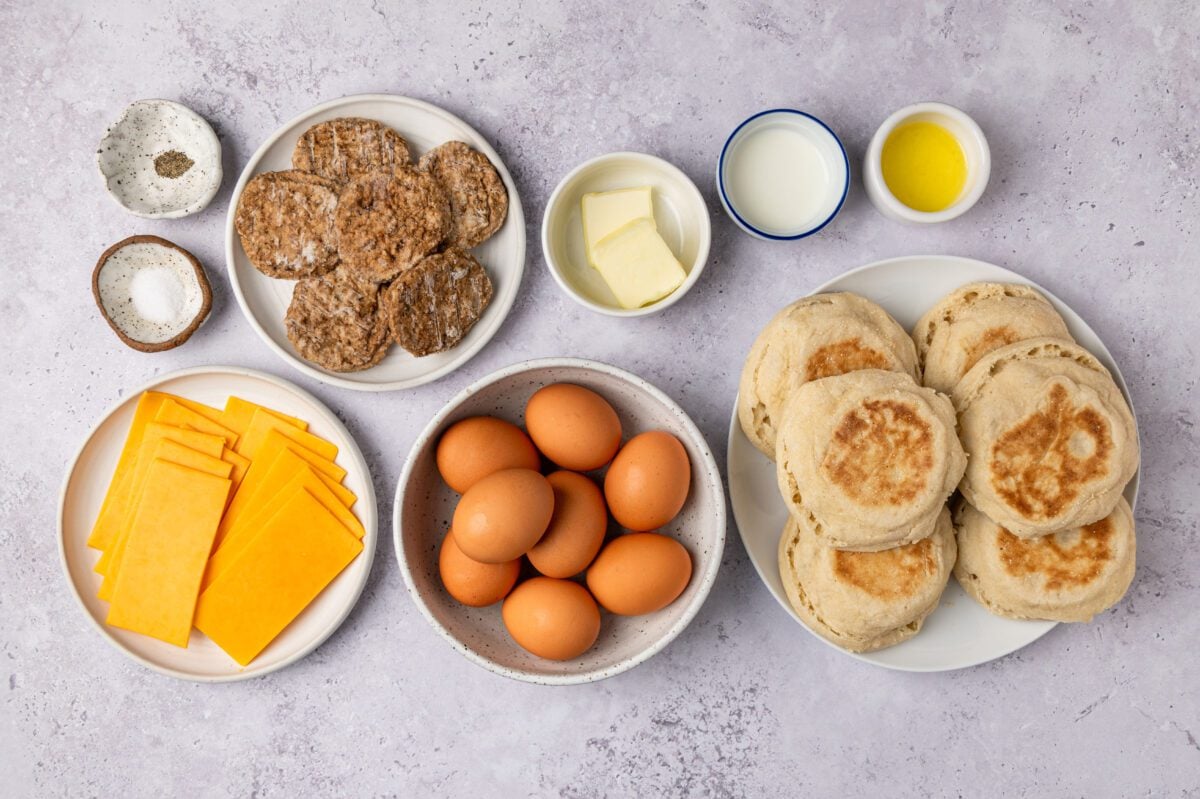
You will need eggs, whole milk (or half and half), unsalted butter, salt, pepper, English muffins, sausage patties and slices of cheddar cheese.
Step by step instructions
Step 1: Prepare the egg mixture. Whisk together eggs, milk, melted butter, salt and pepper in a large bowl until smooth and well blended.

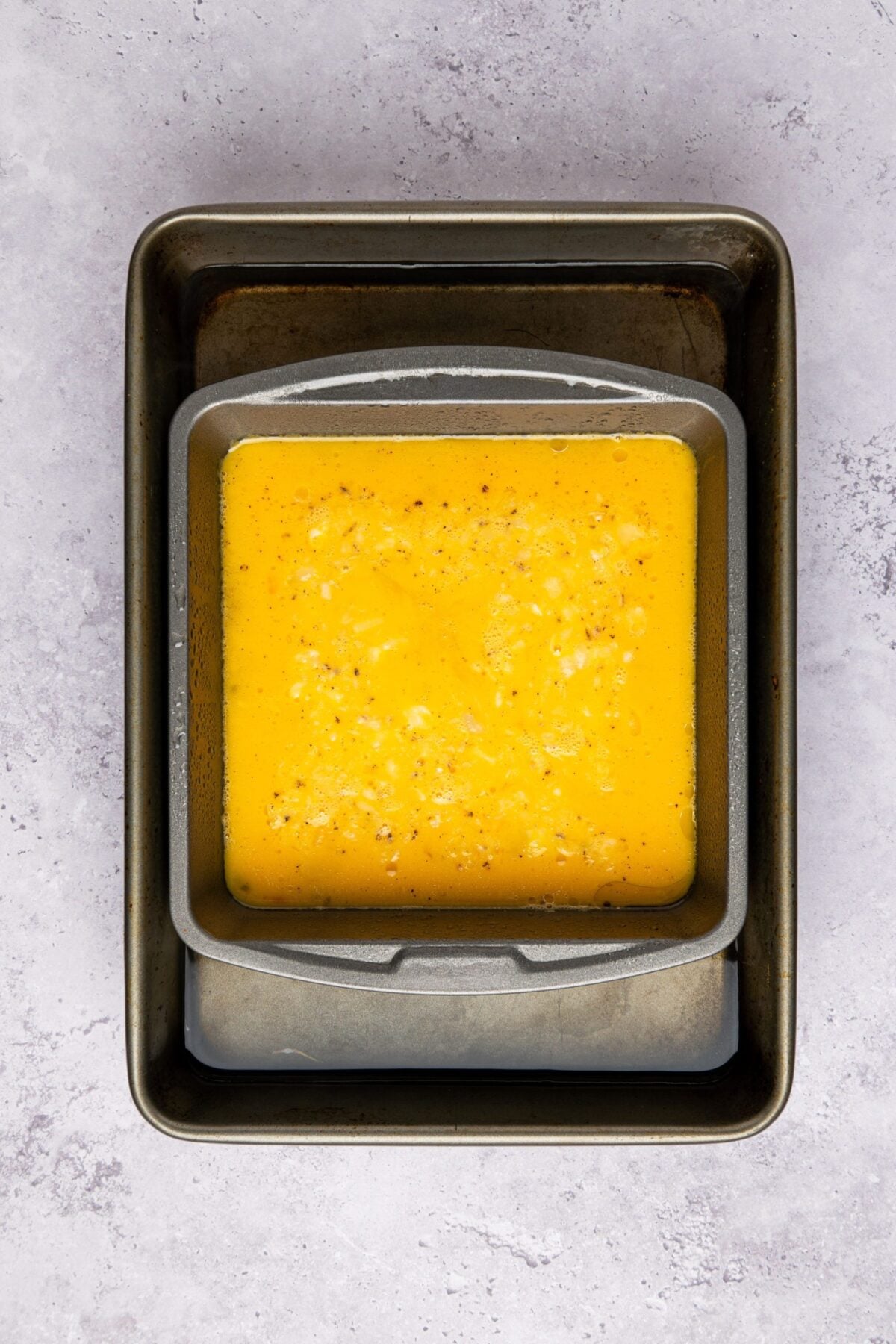
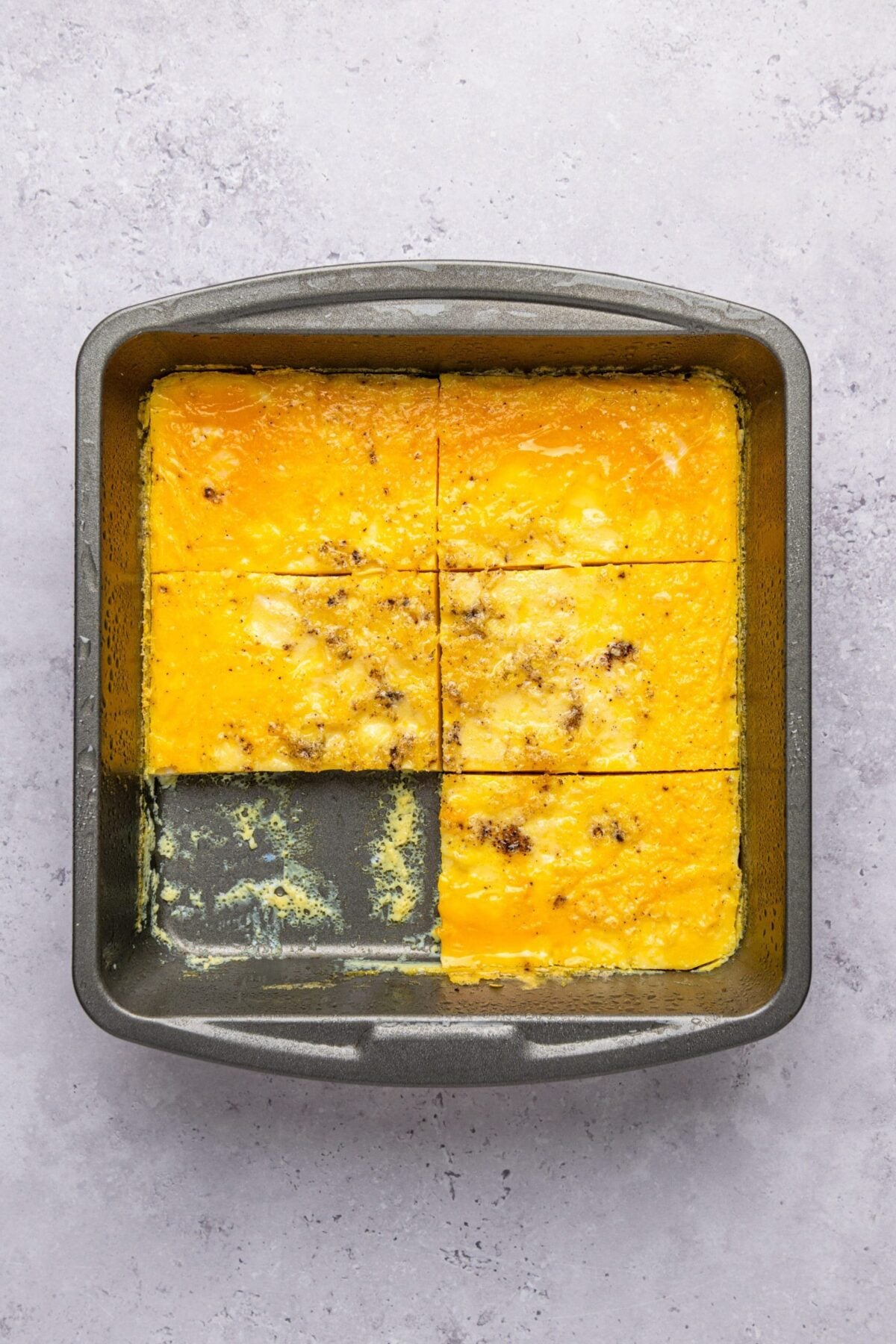
Step 2: Cook the eggs. Pour the mixture into a greased 8-inch baking dish and place it in a larger roasting pan. Bring a kettle or pot of water to a boil and carefully pour the hot water into the outer pan until it reaches halfway up the sides of the egg pan. Bake at 325°F for 20 to 25 minutes until just set, then cool for 5 minutes and cut into 6 squares.
Pro Tip: A double boiler—just place the baking dish in a larger saucepan filled halfway with hot water—moderates the heat around the eggs, preventing them from overcooking around the edges before the center is set. The result is a creamy and tender texture, almost similar to custard.
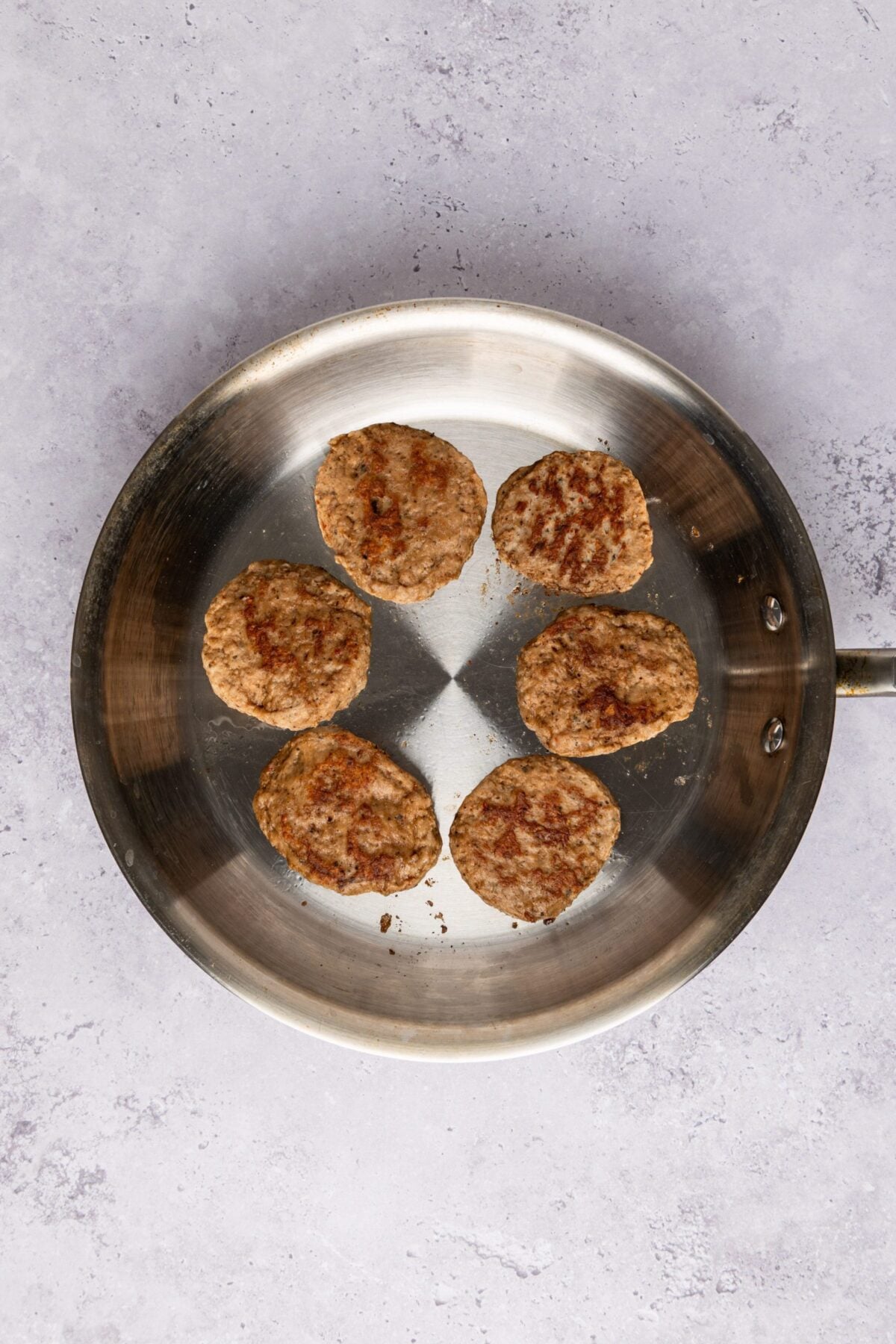
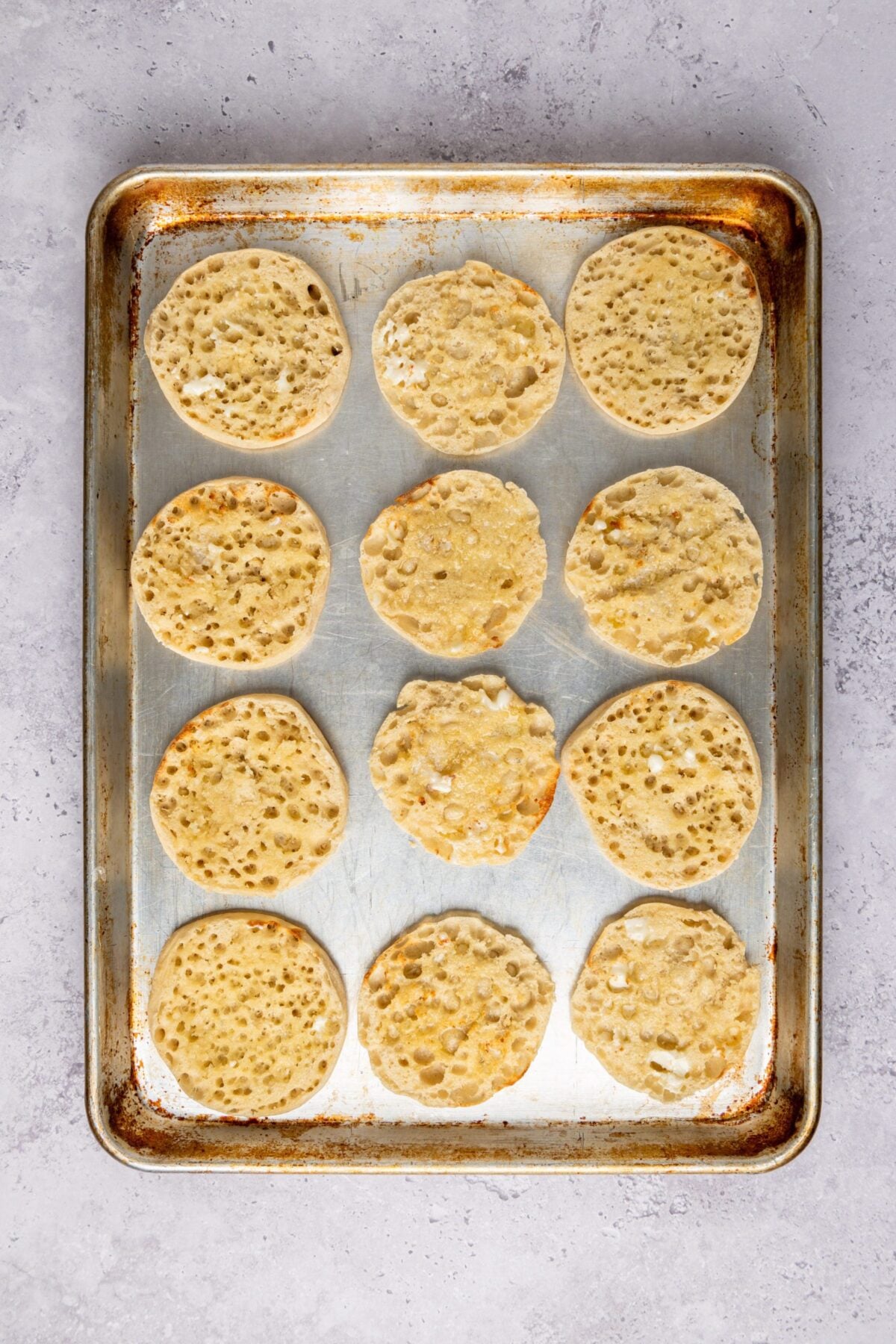
Step 3: Reheat the other ingredients. Heat the sausage patties according to package directions, toast the English muffins until lightly browned, and lightly spread the cut sides with butter while hot.
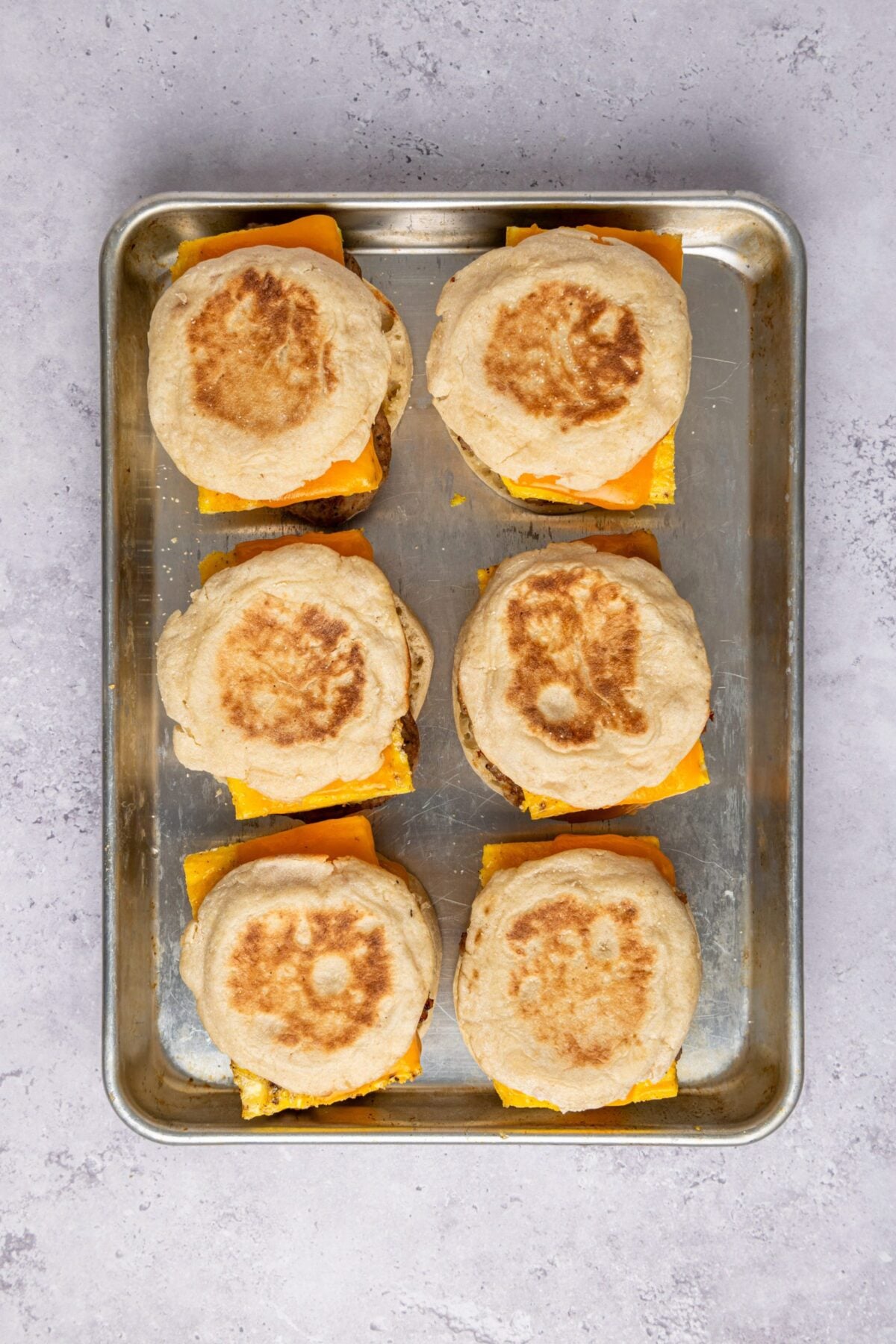
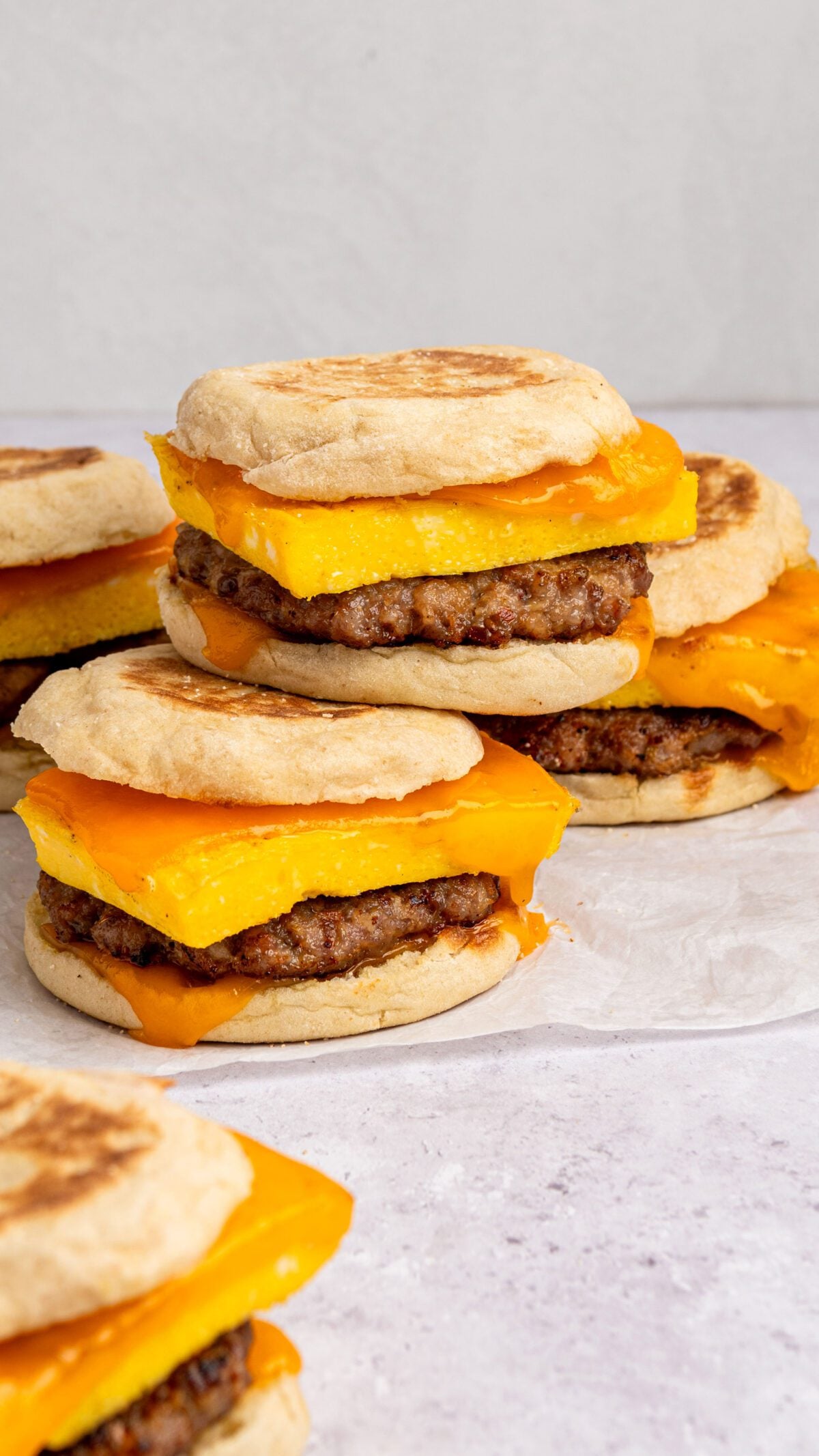
Step 4: Assemble and melt. At the bottom of each muffin half, place half a slice of cheddar cheese, a sausage patty, a square of egg and another half slice of cheddar cheese, then cover with the rest of the muffin. Place the sandwiches on a baking sheet and bake for about 5 minutes until the cheese is melted and everything is heated through. Serve hot.
Pro Tip: Layering the cheese on both sides of the sausage and egg helps hold everything together once melted, making the sandwiches easier to eat.
More Grab-and-Go Breakfast Recipes
Breakfast Sandwiches
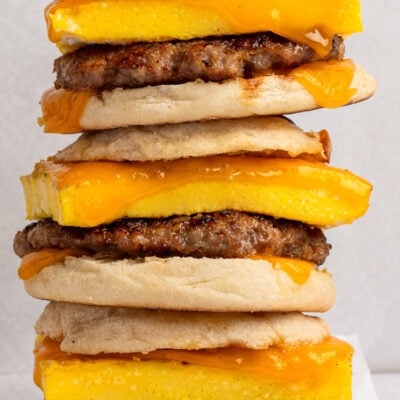
These hot breakfast sandwiches combine tender baked eggs, savory sausage and sharp cheddar on toasted English muffins.
Ingredients
For the eggs
- 8 large eggs
- 2 tablespoons whole milk or half and half
- 1 tablespoon unsalted butter, melted and slightly cooled
- ½ teaspoon salt
- ⅛ teaspoon freshly ground black pepper
For the sandwiches
- 6 English muffins, divided
- Softened butter, to spread
- 6 precooked sausage patties, like Jimmy Dean (see note)
- 6 slices of sharp cheddar cheese, cut in half
Instructions
-
Preheat the oven to 325°F (165°C) and place an oven rack in the middle position. Generously butter a 20 cm (8 in) square pan or coat with non-stick cooking spray. Bring a kettle or pot of water to a simmer for a bain-marie.
-
In a large bowl, whisk together eggs, milk, melted butter, salt and pepper until smooth and well combined. Pour the mixture into the prepared pan.
-
Place the pan in a larger baking dish or roasting pan. Place the pans on the oven rack, then carefully pour the hot water into the outer pan until it comes halfway up the sides of the egg pan.
-
Bake for 20 to 25 minutes or until eggs are just set in the center. Remove the egg mold from the water bath and let it cool for about 5 minutes. Cut into 6 squares.
-
Meanwhile, heat sausage patties according to package directions until hot.
-
Toast the English muffins until lightly browned. Lightly spread cut sides with butter while hot.
-
Place half a slice of cheddar cheese on each bottom half of the muffin. Top with a sausage patty, a square of egg and another half slice of cheddar. Finish with the top muffin halves.
-
Place the assembled sandwiches on a baking sheet and bake for about 5 minutes, or until the cheese is melted and the sandwiches are heated through. Serve hot.
Remarks
- Look for fully cooked breakfast sausage patties that are about the diameter of an English muffin (3½ to 4 inches wide), like Jimmy Dean. They are usually sold in the freezer section, near breakfast foods. Some brands, like Banquet Brown ‘N Serve, make smaller patties; if you use them, you will need to use two patties per sandwich for best coverage.
- Make Ahead/Leftovers: Sandwiches are best enjoyed fresh, but leftovers can be refrigerated in an airtight container for up to 3 days. To reheat, wrap sandwiches loosely in foil and reheat in 325°F oven for about 15 minutes, or until heated through and cheese is melted. (Freezing is not recommended; the egg part of the sandwich tends to become watery and slightly rubbery when thawed and reheated, and its appearance changes as well.)
Nutritional information
Per serving (6 servings)Calories: 448kilocaloriesCarbohydrates: 27gProtein: 24gFat: 27gSaturated fat: 12gCholesterol: 305mgSodium: 667mgFiber: 3gSugar: 2g
This website is written and produced for informational purposes only. I am not a certified nutritionist and the nutritional information on this site has not been evaluated or approved by a nutritionist or the Food and Drug Administration. Nutrition information is provided as a courtesy and should not be construed as a guarantee. Data is calculated via an online nutritional calculator, Edamam.com. Although I do my best to provide accurate nutritional information, these numbers should only be considered estimates. Various factors such as types of produce or brands purchased, natural fluctuations in fresh produce, and how ingredients are processed change the effective nutritional information of a given recipe. Additionally, different online calculators provide different results based on their own nutritional data sources and algorithms. To get the most accurate nutritional information in a given recipe, you should calculate the nutritional information with the actual ingredients used in your recipe, using your favorite nutritional calculator.