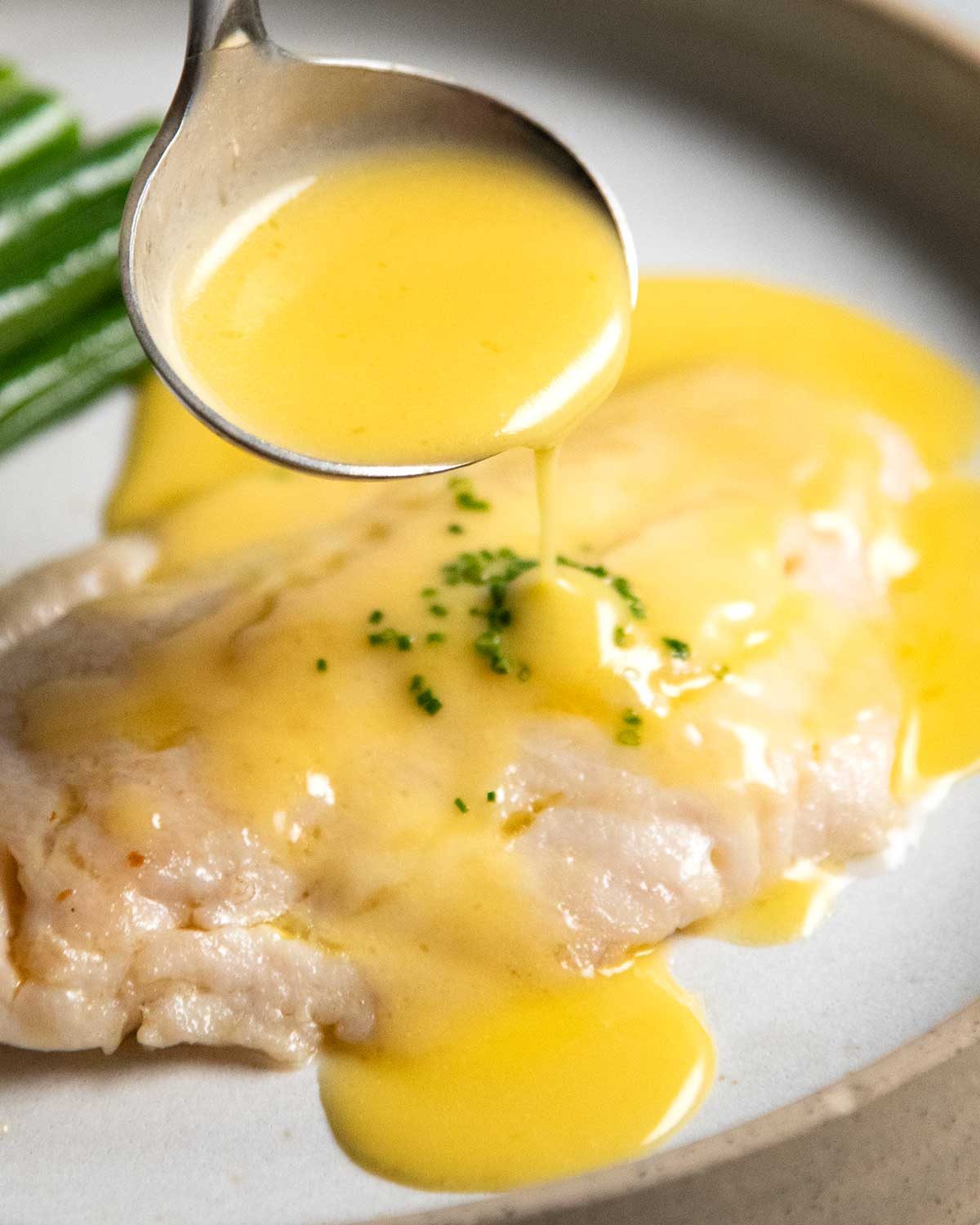
Beurre Blanc is a classic French sauce I made countless times in my restaurant days. This creamy elegant sauce has a signature tang that sets it apart from others. It’s especially great with fish but also works perfectly with shellfish, chicken or vegetables. Let’s go!
Contents
Nagi’s Notes


I absolutely LOVE Beurre Blanc sauce. The first time I tasted it, I was completely smitten – that silky, buttery, tangy sauce is just to-die-for! It might seem like the sort of sauce best left to fancy restaurants, but it’s actually completely straightforward to make at home, especially with JB showing us how. He made vats of it in his restaurant days so you’re in very safe hands!

Beurre Blanc Sauce
Along with Hollandaise Sauce and Béarnaise Sauce, Beurre Blanc Sauce – which means white butter sauce in French – is one of the first basic sauce recipes you learn as a chef at culinary school. It is a staple French sauce you find at cafes and bistros across France, but it’s so elegant it is used at fine dining restaurants all over the world, both the classic and as a base for endless variations. One of my signature appetisers is a crispy kataifi wrapped scampi / langoustine that I serve with a vanilla beurre blanc that Nagi loses her mind over.
Today, though, I am sharing the classic version. It is delicious and light, with a buttery, creamy flavour that’s balanced by the beautiful tang from the wine, white wine vinegar and onion shallots. Though straightforward to make, like any butter emulsified sauce it is a little temperamental so there are few vital rules that must be followed so it does not split.
Ingredients
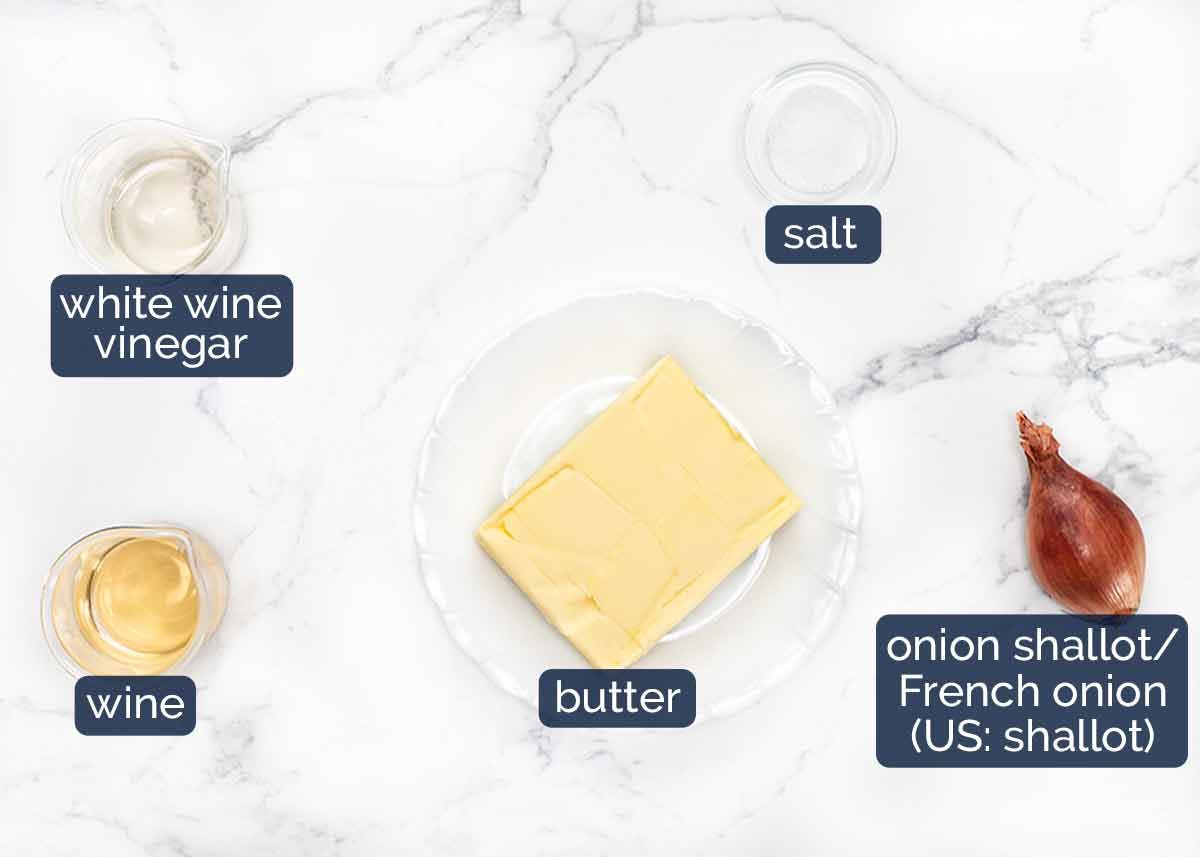
There are only five ingredients required but the most important thing is to ensure that the butter is cold otherwise the sauce will not work.
-
Onion shallot – Also known as French onions, eschalots or shallots (US name), these are the little onions that are purplish/white inside. They have a sweeter, more delicate flavour than regular onions and form the flavour base for Beurre Blanc.
Don’t get confused with a green onion (the long green stems) which are sometimes called shallots.
-
White wine – Chardonnay is my favourite – it adds really good flavour and was the wine most commonly used at the restaurants where I worked in France – but any wine that is not too woody or sweet will work great here. No need to get anything expensive!
-
White wine vinegar – The signature tang that balances its buttery richness comes from white wine vinegar. You could use another pale vinegar, like white vinegar or apple cider vinegar or even lemon juice, but the sauce just won’t be a classic Beurre Blanc.
-
Butter – We need 200 g / 2 sticks of unsalted butter for the sauce, cut into evenly sized 1 cm / 0.4” cubes. But most importantly, it must be COLD! Leave it in the fridge until you are about to add it to the pan. And use a spoon, not your fingers, to add the butter in gradually, as the warmth of your hands will melt the butter. The cold butter melting slowly into the warm wine and vinegar is what turns it into a creamy sauce. It will not thicken if the butter is not cold. Oui, it’s a delicate process!
-
Cooking salt / kosher salt – Used for seasoning. If you’ve only got table salt, halve the amount. For salt flakes, increase by 50%.
A NOTE ON CREAM
Many recipes online use cream in Beurre Blanc sauce which is not traditional. However, cream prevents the sauce from splitting, it is a useful insurance policy so I have included this as an option in my recipe. I only use 2 tablespoons which is the minimum required and it doesn’t alter its taste. If you use more than this, as many recipes do, you will lose the authenticity of the flavour.
How To Make Beurre Blanc Sauce
Here is how to make Beurre Blanc sauce. The most important thing is to ensure that once you start adding butter, the heat always remains low as otherwise the sauce will split. This includes once the sauce is made and is being kept warm until serving.
However, if you are a first timer and want to take an easy precaution against the risk of splitting, just add 2 tablespoons of cream in Step 1. If you do this, you can even bring the sauce to a boil and it will not split.
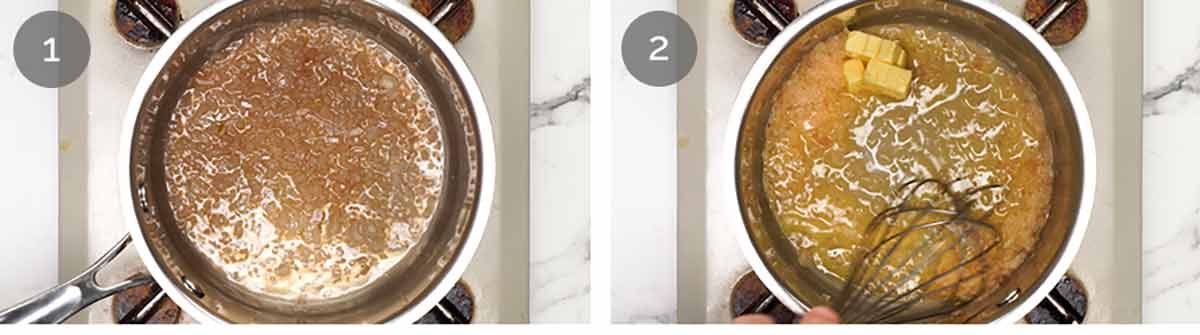
-
Wine reduction – Simmer the onion shallots, wine and vinegar in a small saucepan over medium heat. Let it simmer until it has reduced by two-thirds – this will take about 5 minutes. You should have 2–3 tablespoons of the liquid left, not including the onion shallots – any less liquid and you won’t have enough to emulsify with the butter. If you have too much, the sauce will be too thin.
-
Add COLD butter – Immediately reduce the heat to low – this is vital as if the temperature is too high, the sauce will split which is when the fat separates and the sauce becomes watery. You never want the mixture to even reach a simmer (not even approaching a bubble!). Make sure you are using your smallest burner as low heat on a large burger is much stronger than low on a small burner.
Take the butter cubes out of the fridge, then, using a tablespoon, add 1 heaped spoonful of cubes to the reduction. Don’t use your fingers as the warmth will melt the butter – and you’ll get greasy hands!
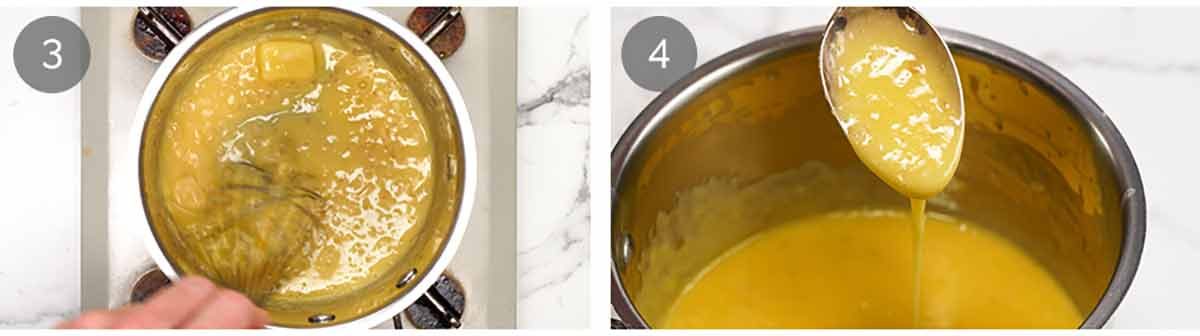
-
Whisk the butter to emulsify – Whisk the butter into the reduction briskly and constantly, letting each addition melt before adding the next spoonful. The clear wine reduction will turn into a pale milky yellow colour, and will thicken as you add more and more butter. It should take around 5 minutes to add all the butter in. Add the salt in at the end.
-
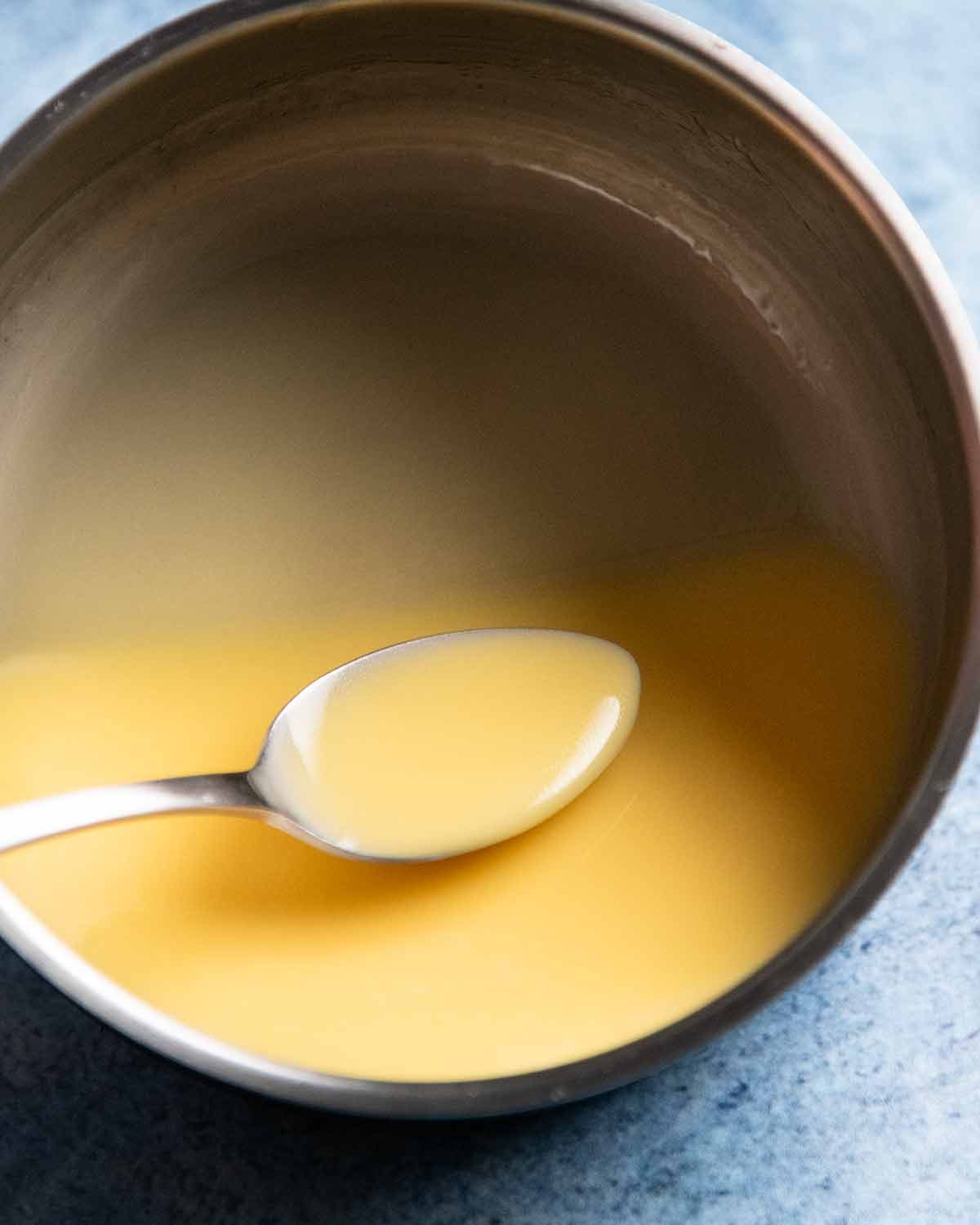
Sauce consistency – After whisking in the butter, the sauce should be slightly thickened like pouring cream, and it should be pale yellow. It should be thick enough to lightly coat the back of a spoon, but it is not as thick as hollandaise or a béchamel sauce.
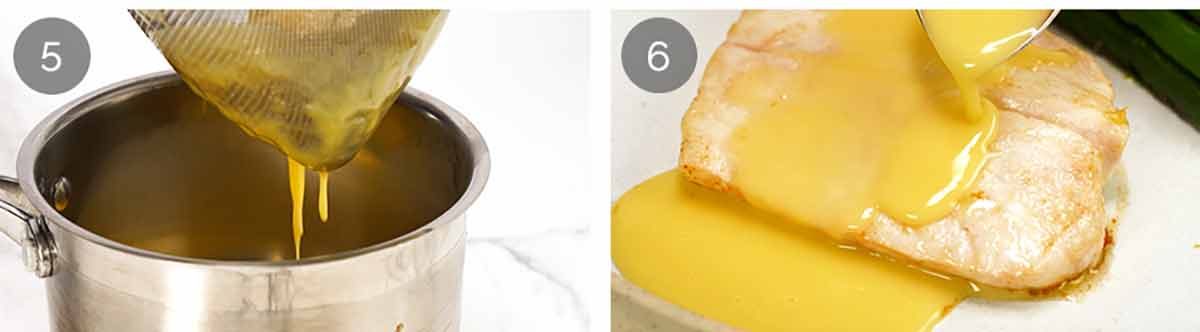
-
Strain the sauce through a fine-mesh sieve into another small saucepan. Press down on the onion shallots with a spoon as you go to extract every last bit of juice and flavour.
TIP: Don’t throw out the onion shallots – they are beautifully buttery and infused with a lovely vinegar flavour. Scatter them over vegetables or a salad.
-
Warm and serve – Place the saucepan over LOW heat on your smallest burner to keep the sauce gently warm. The heat must stay very low otherwise the sauce can split. You just want it warm enough so it doesn’t solidify, as reheating cold Beurre Blanc usually causes it to split. Spoon generously over fish or your favourite protein, finish with finely chopped chives and enjoy!
Keeping Beurre Blanc Warm for Service
Once the Beurre Blanc sauce is made, keep it warm while you cook the protein or vegetables you want to serve with it. On a very low heat, the sauce can be kept warm for up to 2 hours as long as it is whisked every 5 minutes or so to ensure the base doesn’t catch, which you can do while you’re at the stove cooking the protein you’re planning to serve with the sauce. This is what we used to do when I worked at restaurants rather than making Beurre Blanc to order which is not viable.
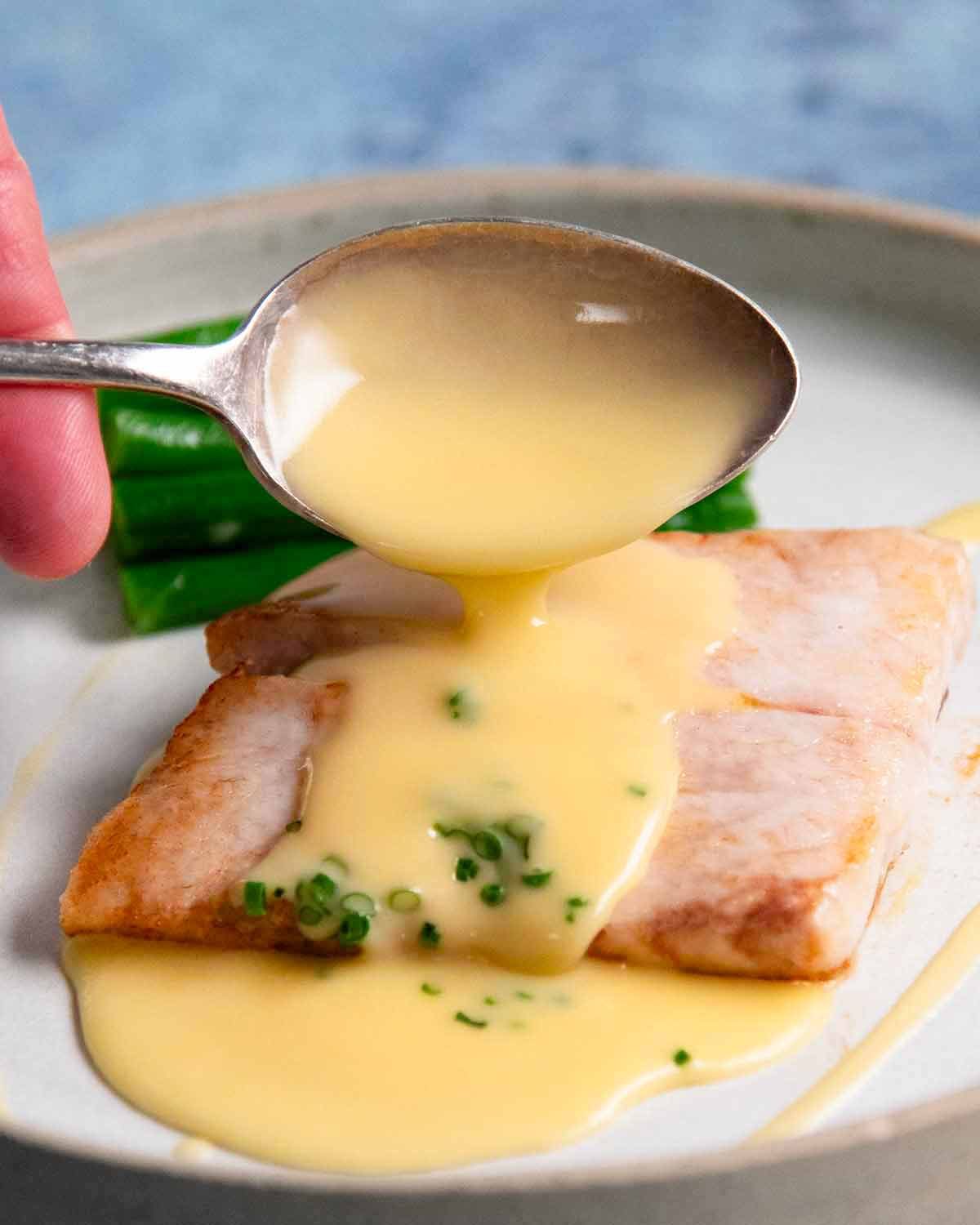
How to Serve Beurre Blanc Sauce
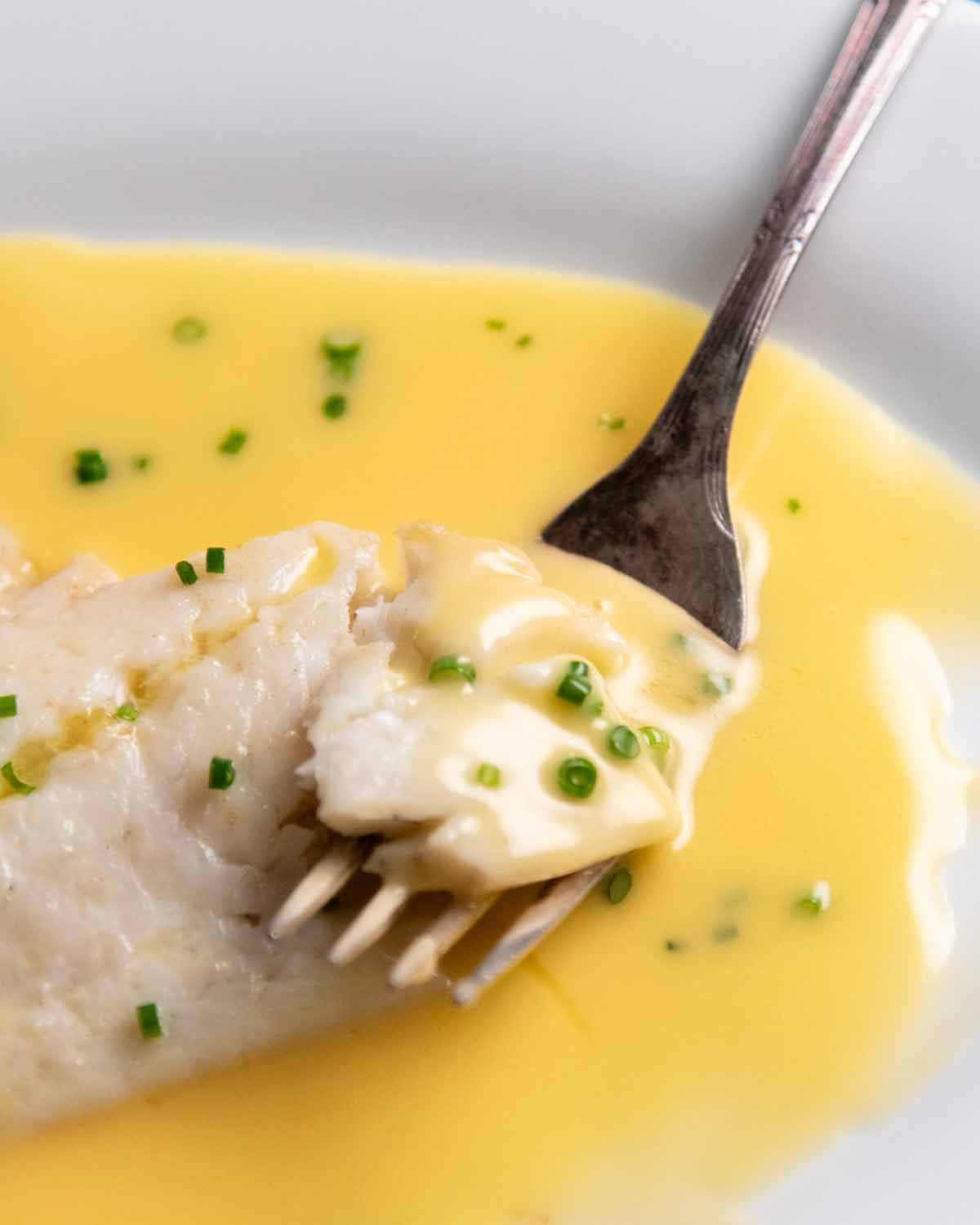
Beurre Blanc is a classic sauce to serve with a simple pan-fried piece of white fish. Any fish will work but I like thin-filleted fish like snapper, John Dory, bream or flounder paired with a pea puree. Poached or gently pan-fried chicken is also a lovely pairing, as are steamed vegetables like asparagus, broccoli / broccolini – or even potatoes.
It’s such an elegant sauce, it really can elevate something simple into a lovely meal. It forms part of the foundations of French cuisine, and one all French chefs learn very early on. I absolutely love it and can’t wait for you to try it and tell me what you think. Bon appétit! – JB
FAQ – Beurre Blanc Sauce
Yes. It won’t be a classic Beurre Blanc, but it will still be delicious. Replace the wine with non-alcoholic wine or salt reduced chicken stock / fish stock.
The reduction is the flavour base of the sauce, but it also helps the butter emulsify properly. If there is too much liquid left, the sauce can become thin and struggle to come together properly. You want roughly 2 to 3 tablespoons of liquid left (not including the onion shallots) in the saucepan before adding the butter.
If the reduction becomes too dry, there won’t be enough liquid for the butter to emulsify into. If this happens, simply add a small splash of water or wine to loosen it before continuing.
Cold butter melts slowly, giving it time to emulsify into the reduction and create a smooth sauce. Warm butter melts too quickly and increases the chances of the sauce breaking.
Usually one of three things happened: the heat was too high when whisking in the butter, the butter was added too quickly, or the sauce became too hot after it was finished. Beurre Blanc should never simmer once the butter starts going in.
Unfortunately no. Once a Beurre Blanc has properly split, it’s impossible to bring it back successfully. I’ve tested many methods and never found one that reliably restores that smooth, silky texture. This is why keeping the heat low and adding the cold butter slowly is so important.
No, once cold, the butter solidifies and reheating causes the sauce to split. It’s a sauce that is really at its best freshly made.
Watch How To Make It
Hungry for more? Subscribe to my newsletter and follow along on Facebook, Pinterest and Instagram for all of the latest updates.

Beurre Blanc Sauce
Prep: 5 minutes
Cook: 15 minutes
Total: 20 minutes
Sauces
French
Servings4 people
Tap or hover to scale
Ingredients
Optional safeguard from splitting
Prevent screen from sleeping
Instructions
ABBREVIATED RECIPE
-
Reduce onion shallot, wine and vinegar to 2–3 tbsp of liquid. On low heat, whisk in 1 tbsp cold butter at a time. Add salt, strain. Use immediately.
FULL RECIPE
-
Make reduction – In a small saucepan over medium heat, add the onion shallot, white wine and vinegar. Also add the cream, if using (see Note 4). Let it simmer gently until it reduces by 2/3 (about 5 minutes once it starts simmering). You should have just 2 to 3 tablespoons of the liquid left no including the onion shallot. (Note 5)
-
Add COLD butter – Turn the heat to low. That is very important because if it’s too hot, your sauce will split (you don’t want the mixture to even reach a simmer, use your smallest burner). Add the cold butter, one heaped tablespoon at a time while whisking briskly and constantly. (Note 6)
-
Emulsify sauce – Let each addition melt before adding more. The sauce will thicken as you add the butter and will become of a pale milky yellow colour. This should take around 5 minutes. Add the salt in at the end. (Note 7)
-
Sauce consistency – Keep whisking until all the butter is incorporated, the sauce should be slightly thickened like pouring cream with a pale yellow colour. It should lightly coat the back of a spoon.
-
Strain – Strain the sauce through a fine sieve into another small saucepan, pressing on the onion shallots to extract all the flavour. (Note 9)
-
Warm and serve – Place the saucepan over LOW heat on your smallest burner to keep the sauce gently warm while you cook your protein. The heat must stay very low or the sauce will split. You only want to keep it warm, not hot. (Note 8) When needed, spoon generously over fish like I do here or chicken, or even simple steamed vegetables. Sprinkle some finely chopped chive over the top and enjoy!
Recipe Notes:
And careful, not to confuse them with what some call “shallots” in Australia… those long green onions.
2. Wine – Any white wine that’s not too woody or sweet will work great here. Chardonnay is my favourite, it adds really good flavour and it’s the wine that was the most commonly used at restaurants I worked at in France. There is no need to use an
3. Vinegars – No need for a fancy vinegar here, simple white wine vinegar does the job perfectly. You can use another kind of vinegar like apple cider vinegar (or even lemon juice). It won’t be a classic beurre blanc, of course… but it will still bring that nice tang and taste very good.
4. Cream – A little bit of cream will prevent your Beurre Blanc from splitting even if the heat is too strong. So this is an optional safeguard to make the sauce foolproof. It’s not strictly Beurre Blanc if you use it, but if you are a first timer you may wish to take this precaution.
5. Reduction – This is your flavour base. Make sure you end up with the right quantity. Any less liquid and you won’t have enough to bind and thicken with the butter. If you have too much, the sauce will be too thin.
6. Using a spoon – Use a spoon to add the butter, not your fingers. It keeps your hands clean… but more importantly, it keeps the butter cold. With your fingers, you warm it up too quickly, and cold butter is what helps the sauce emulsify properly.
7. Adding butter – If you add too much too fast, the sauce can’t keep up, the butter won’t emulsify properly and it will split.
8. Leftover onion shallots – Many recipes will tell you to discard the onion shallots. You can… but I don’t. After straining, they’re left sitting in the sieve, full of that wine-vinegar flavour. Don’t waste this, non! I like to toss them through the vegetables you’re serving with the fish – green beans, spinach, broccoli or even potatoes.
9. Keep warm – Beurre Blanc needs to stay warm as it will solidify when cold, and it usually splits if reheated. I’ve tried many ways to bring cold Beurre Blanc back without splitting, but never had much success.
Leftovers and storage – As per note 8 Beurre Blanc solidifies when cold and cannot be reheated so it needs to be kept warm per recipe instructions (step 6). If you stir it every 5 minutes or so and have it on an extremely low heat keeping it barely warm, you can keep it for 2 hours. This is what we used to do at restaurants I’ve worked at.
Nutrition per serving.
Nutrition Information:
Calories: 372cal (19%)Carbohydrates: 0.4gProtein: 0.4g (1%)Fat: 41g (63%)Saturated Fat: 26g (163%)Polyunsaturated Fat: 2gMonounsaturated Fat: 11gTrans Fat: 2gCholesterol: 108mg (36%)Sodium: 7mgPotassium: 26mg (1%)Sugar: 0.2gVitamin A: 1250IU (25%)Vitamin C: 0.04mgCalcium: 14mg (1%)Iron: 0.1mg (1%)
In Memory Of Dozer
Once, I put a French beret on Dozer as a joke and he immediately looked like he was about to criticise my cooking.
After assuring him that I would be okay, he went for a snooze under the table like an exhausted old French café owner who’s been working every lunch and dinner service for the last 50 years. A true master of the afternoon nap.