This post may contain affiliate links. Read my full disclosure policy.
This pasta primavera is a must-have when summer vegetables are at their peak: they’re easy to make in advance and just as delicious served hot or at room temperature.
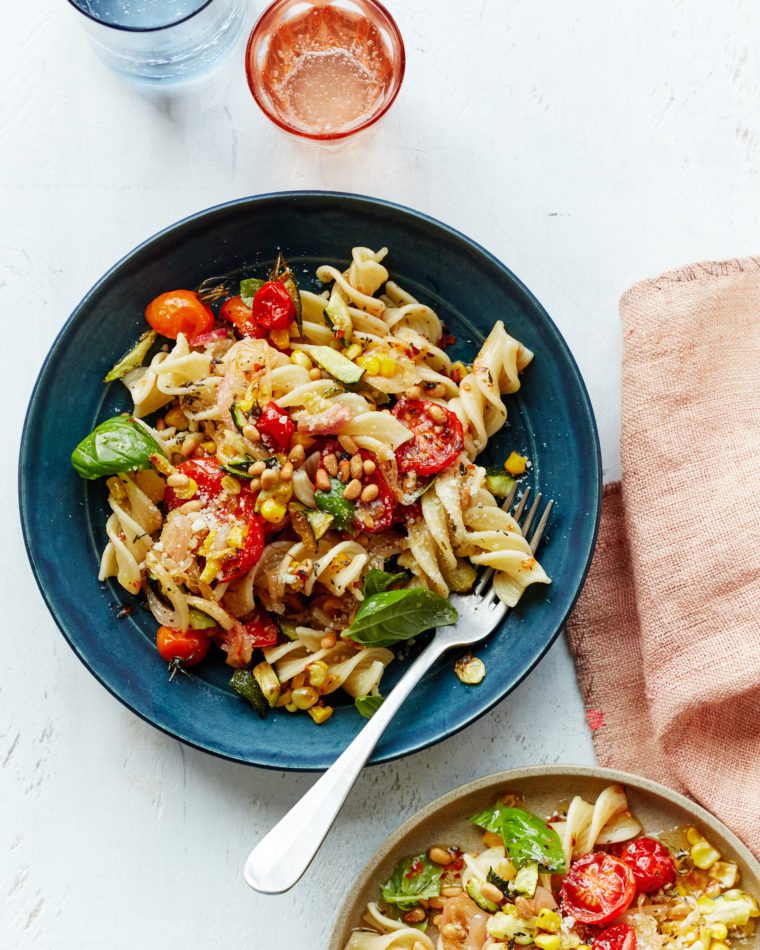
Photo by Johnny Miller (Clarkson Potter, 2021)
The word primavera means “spring” in Italian, but pasta primavera now refers to pasta garnished with vegetables from any season. This version, with roasted cherry tomatoes, corn and zucchini, makes the most of summer produce. It’s hearty enough to serve as a main dish or as a side with grilled chicken or Italian sausage. Bonus: It’s just as good at room temperature, so it can double as a make-ahead pasta salad.
“This was a wonderful dish! So flavorful and satisfying but not heavy. Perfect pasta dish for summer!”
Contents
What You’ll Need to Make Primavera Pasta
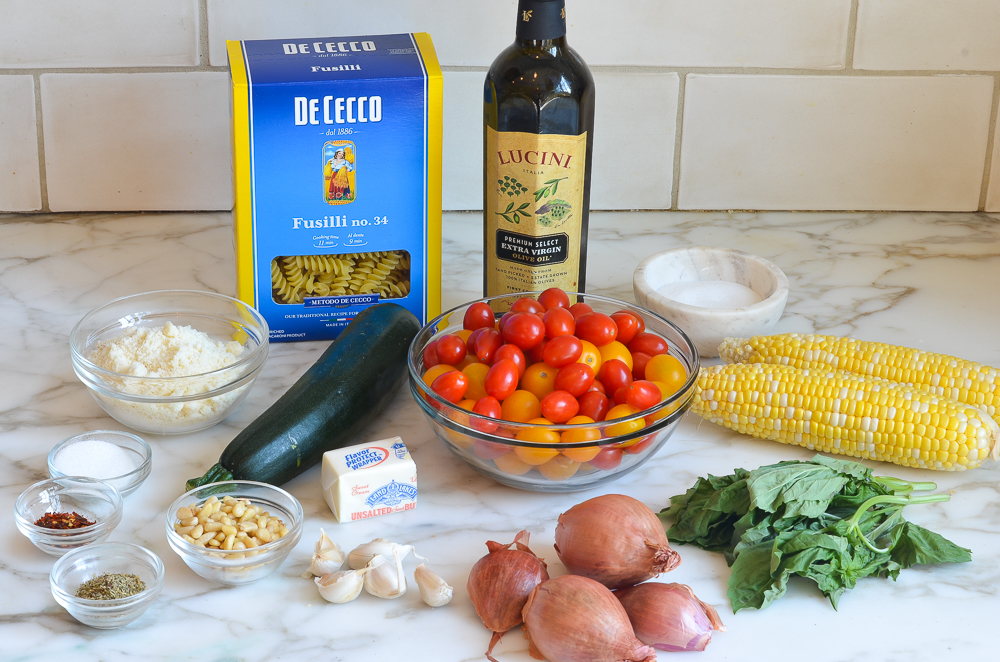
- Cherry tomatoes, zucchini and fresh corn: These peak-of-summer vegetables add sweetness, texture, and tons of flavor.
- Shallots and garlic: The aromatic base which gives the dish its tasty structure.
- Extra virgin olive oil and butter: Olive oil is used for roasting and the final drizzle, while a little butter adds richness and gives the sauce a silky finish.
- Fusilli (or similar pasta): Twisted shapes like fusilli, penne, farfalle, gemelli or campanelle all do a great job of catching the sauce and clinging to the vegetables.
- Herbes de Provence and crushed red pepper flakes: A fragrant blend of dried herbs with a touch of heat to round out the flavor.
- Pecorino Romano cheese: Tangy and salty, perfect for tying everything together. Parmigiano-Reggiano works too.
- Fresh basil and pine nuts: Just before serving, a sprinkle of basil and toasted pine nuts adds brightness, crunch and a final layer of flavor.
- Access the printable recipe for precise measurements
Step by step instructions
Step 1: Mix vegetables to roast longer. On a foil-lined baking sheet, combine the cherry tomatoes, shallots, garlic, olive oil, salt and a pinch of sugar. Mix everything together with your hands or a rubber spatula until the vegetables are well coated.
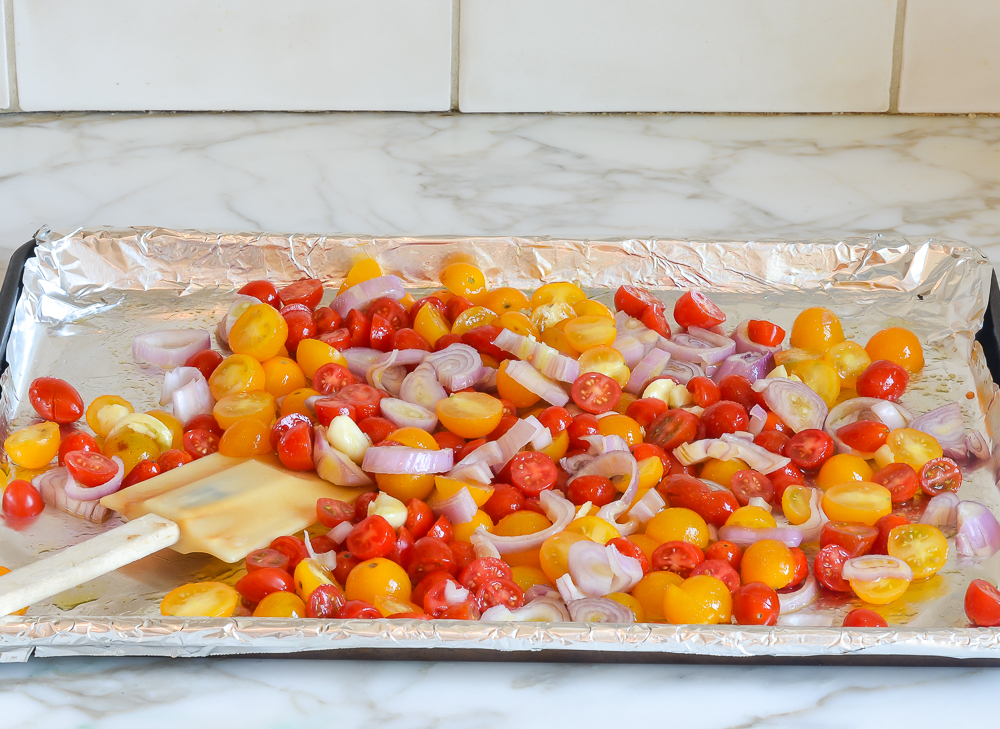
Step 2: Roast. Arrange the vegetables in a single layer and roast at 450°F for about 20 minutes, or until the tomatoes burst and begin to brown.
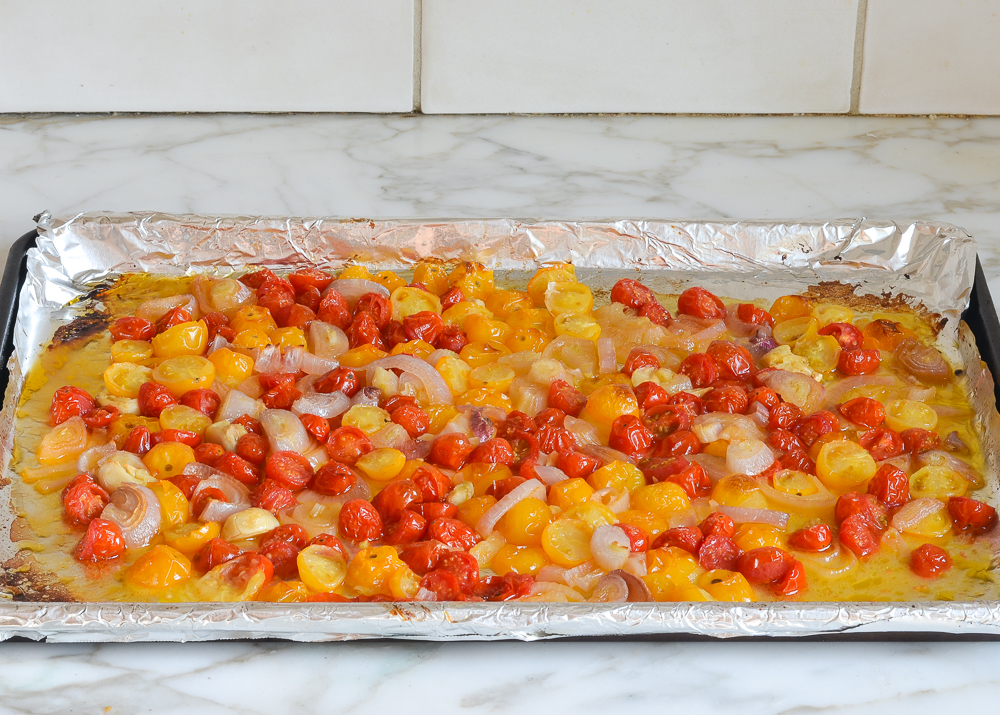
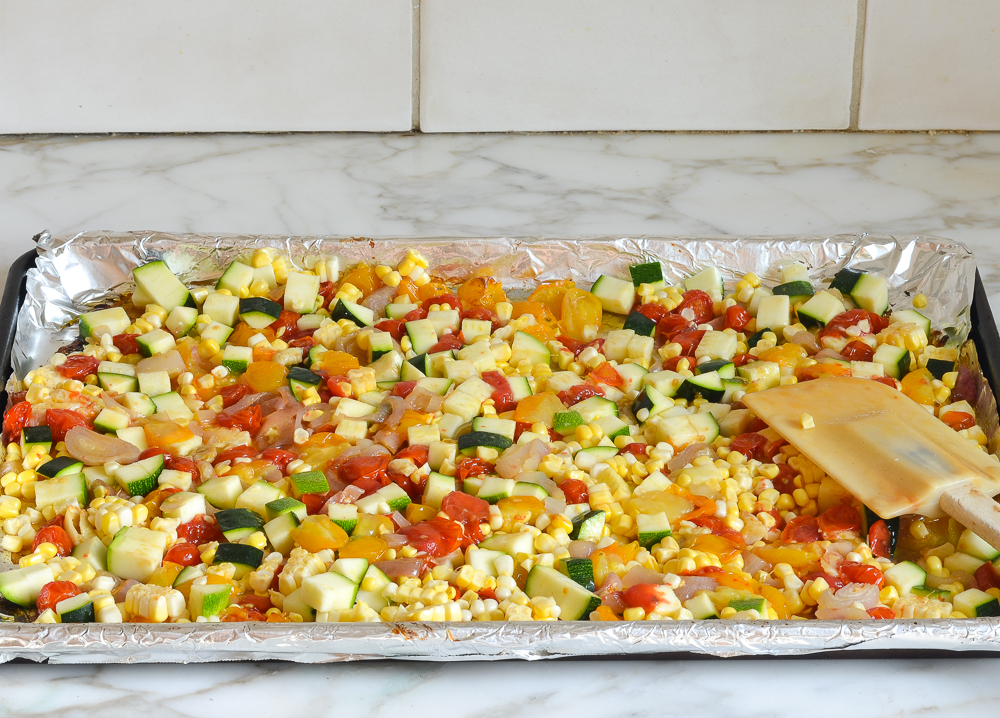
Step 3: Add the quick-cooking vegetables. Remove the pan from the oven and add the zucchini and corn. Mix with a rubber spatula and spread into an even layer. Roast for another 5 minutes, until the zucchini and corn are tender-crisp.
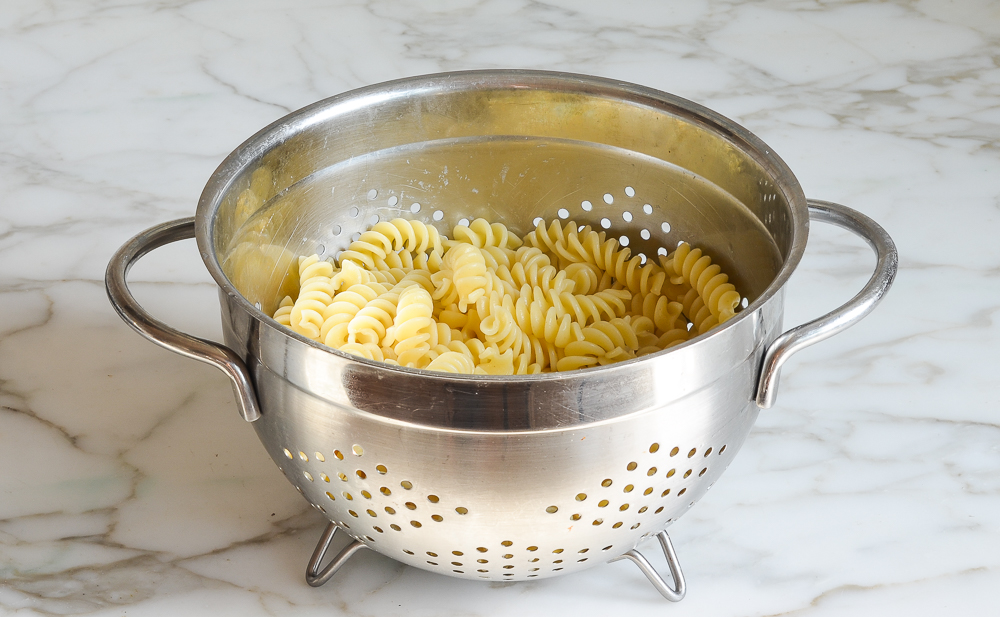
Step 4: Cook the pasta. Meanwhile, boil the pasta in salted water until al dente and drain.
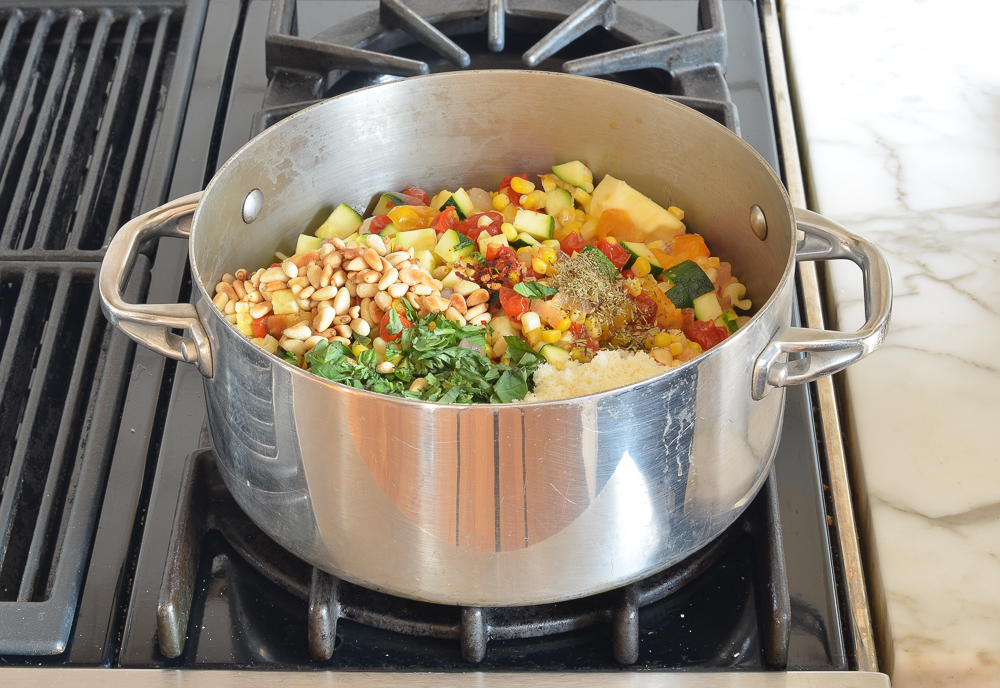
Step 5: Put it all together. Return the pasta to the pan, along with the roasted vegetables and all their juices. Add the butter, Provence herbs, red pepper flakes, Pecorino Romano, basil and pine nuts.
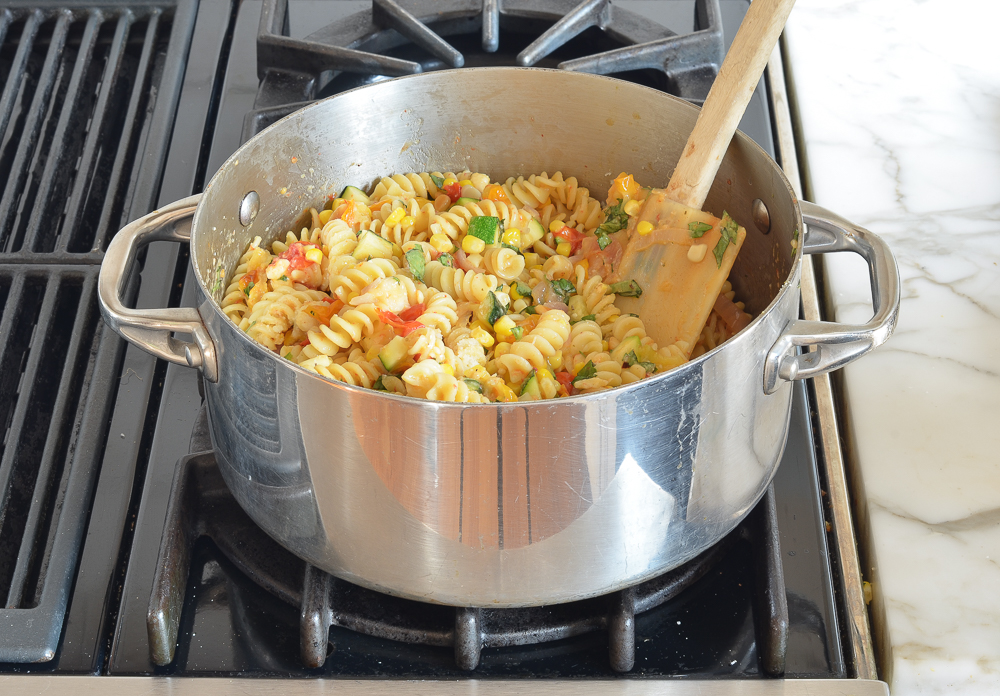
Step 6: Mix and serve. Mix everything well, then taste and adjust the seasoning if necessary. Pour into bowls, drizzle with a little olive oil if desired and top with grated cheese. Appreciate!
Video tutorial
You may also like
Primavera Pasta
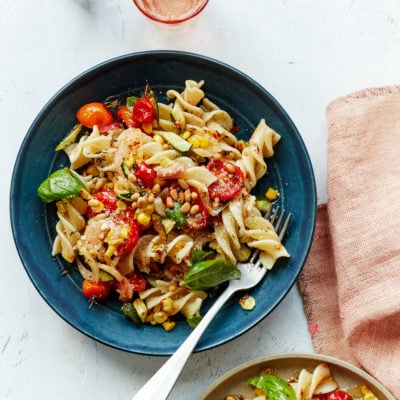
This pasta primavera takes a summer twist with roasted tomatoes, sweet corn and zucchini: it’s fresh, flavorful and so easy to make.
Ingredients
- 1¼ pounds (2 quarts) cherry or grape tomatoes, cut in half
- 4 shallots, thinly sliced
- 5 cloves garlic, peeled and crushed
- ¼ cup Extra virgin olive oil, and more to serve
- 2 teaspoons salt
- 1½ teaspoons sugar
- 1 medium zucchini, cut into ¼ inch (6 mm) pieces
- 1½ cups fresh corn kernels, from 2 ears of corn
- 12 ounce rifle (or similar shape) pasta
- 3 tablespoons unsalted butter
- 1 teaspoon herbs of provence (see note)
- ⅛ teaspoon crushed red pepper flakes
- ½ cup grated pecorino romano cheese, and more to serve
- ½ cup tightly packed basil leaves, coarsely chopped
- ⅓ cup pine nuts, grilled (see note)
Instructions
-
Preheat the oven to 450°F (230°C). Line a baking sheet with heavy-duty foil.
-
Combine the tomatoes, shallots, garlic, olive oil, salt and sugar on the prepared baking sheet. Mix with your hands or a rubber spatula until the vegetables are evenly coated. Arrange the vegetables in a single layer and roast for 15 to 20 minutes, or until the tomatoes just begin to brown. Remove the pan from the oven and add the zucchini and corn. Mix with a rubber spatula (the tomatoes will fall apart; that’s OK) and spread into an even layer. Roast for another 5 minutes, until the zucchini and corn are tender-crisp.
-
Meanwhile, cook the pasta in salted water until al dente. Drain, then return the pasta to the pan. Add the roasted vegetables and all their juices to the pasta, along with the butter, herbes de Provence, red pepper flakes, pecorino romano, basil and pine nuts. Mix well, then taste and adjust the seasoning if necessary. Pour into pasta bowls and drizzle with olive oil, if desired. Serve with more grated cheese.
Remarks
- Herbes de Provence can be found in the spice section of your supermarket. Most markets carry it, but if you can’t find it, dried thyme can be substituted.
- To toast the pine nuts, place them in a dry skillet and cook over medium-low heat, stirring frequently, until browned in spots, about 3 minutes.
Nutritional information
Per serving (6 servings)Calories: 540kilocaloriesCarbohydrates: 66gProtein: 16gFat: 25gSaturated fat: 7gCholesterol: 27mgSodium: 695mgFiber: 6gSugar: 11g
This website is written and produced for informational purposes only. I am not a certified nutritionist and the nutritional information on this site has not been evaluated or approved by a nutritionist or the Food and Drug Administration. Nutrition information is provided as a courtesy and should not be construed as a guarantee. Data is calculated via an online nutritional calculator, Edamam.com. Although I do my best to provide accurate nutritional information, these numbers should only be considered estimates. Various factors such as types of produce or brands purchased, natural fluctuations in fresh produce, and how ingredients are processed change the effective nutritional information of a given recipe. Additionally, different online calculators provide different results based on their own nutritional data sources and algorithms. To get the most accurate nutritional information in a given recipe, you should calculate the nutritional information with the actual ingredients used in your recipe, using your favorite nutritional calculator.